Verified October 23, 2026. Foliage timing, special viewing dates, illumination hours, and bus schedules change from year to year. Confirm the current details for your travel dates before you go.
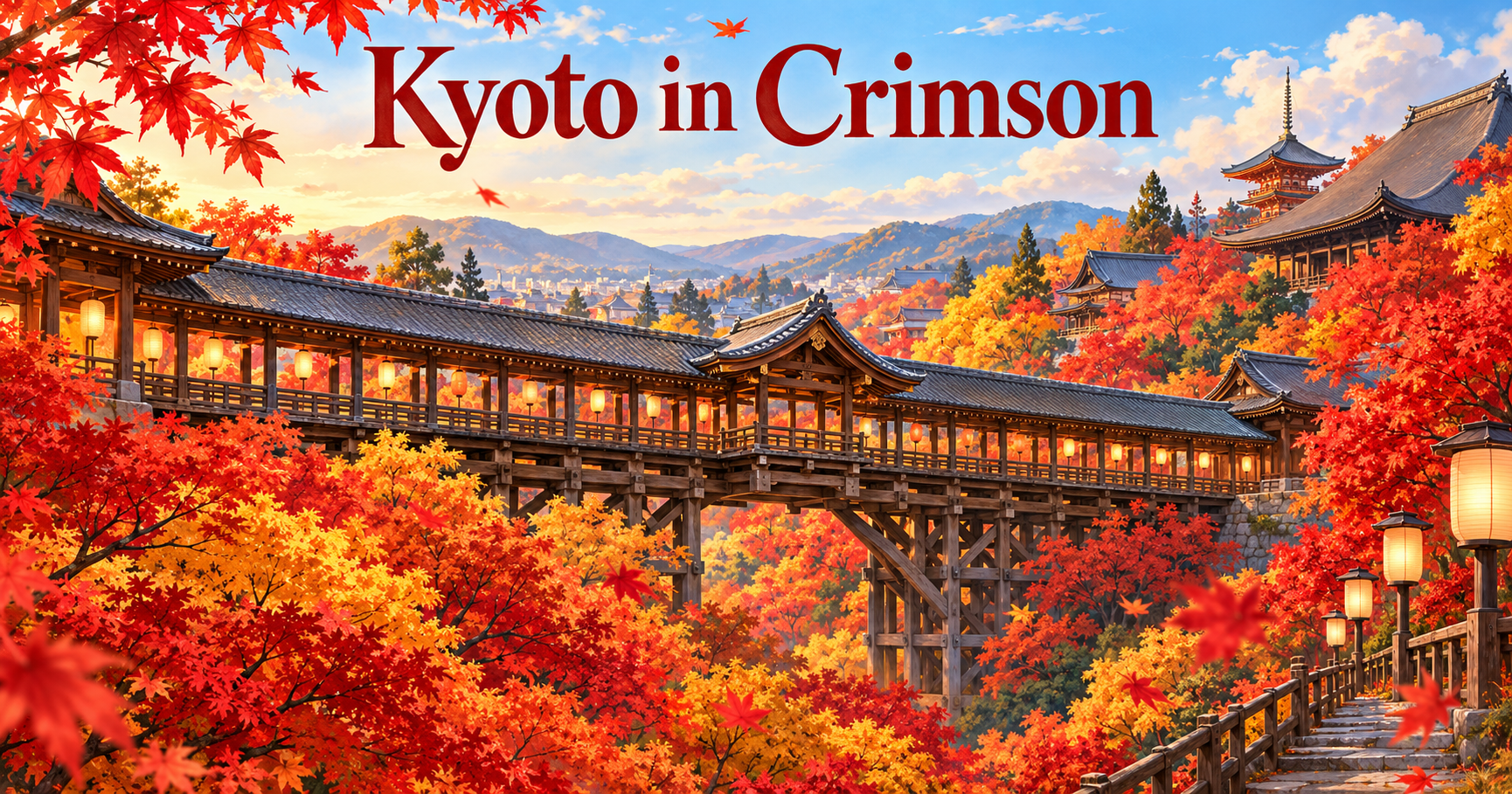
Kyoto fall foliage turns the old capital into a painting: maples flaring crimson over wooden temple halls, a covered bridge floating above a valley of red, and lanterns glowing through the leaves after dark.
The secret to seeing Kyoto fall foliage well isn’t luck—it’s timing. Pick the right base, start at opening, save the famous halls for their evening light-ups, and use Kyoto’s own crowd tools to slip between the busiest hours.
Kyoto fall foliage at a glance: the essential spots
| Spot | Why go | Best timing |
|---|---|---|
| Tofuku-ji | About 2,000 maples around the Tsutenkyo bridge | Right at opening |
| Eikando (Zenrin-ji) | About 3,000 maples and a celebrated evening light-up | Evening session |
| Kiyomizu-dera | Autumn special night viewing above the city | After dark |
| Tenryu-ji, Arashiyama | A UNESCO-listed garden on the west side | 8:30 a.m. opening |
| Ruriko-in | A quieter northern escape | Reserve online for special openings |
Maple counts and timing checked against official railway and temple pages.[1][2][5][6][12]
1. Time your Kyoto fall foliage trip for late November
At signature spots, the color usually peaks from mid-November into early December.[1][2] Every year shifts a little, so Kyoto’s official travel guide publishes an Autumn Leaves Calendar with foliage status by area, live from October 30, 2026.[3]
Loomavoy’s pick for 2026: the window from November 21 to 30, when Kiyomizu-dera’s night viewing and Eikando’s light-up both run.[2][5]
2. Base yourself near Kyoto Station
For a leaf-peeping trip, the station area is the smartest base. Kyoto City’s sightseeing express buses start here, and the city’s luggage storage and same-day hotel delivery services are concentrated at the station.[3][9] You can even send bags ahead from Tokyo with the LUGGAGE EXPRESS service, so you arrive in Kyoto ready to explore.[11]
Getting here is easy: the Tokaido Shinkansen links Tokyo with Kyoto, running up to 12 Nozomi trains an hour in each direction at peak.[15]
3. Be at Tofuku-ji the minute it opens
Tofuku-ji is the classic Kyoto autumn view: about 2,000 maples around the Tsutenkyo bridge, a covered walkway that seems to float over a valley of red.[1][4] In 2026, the special viewing of Tsutenkyo and the Kaisando runs November 14 to December 6, with entry from 8:30 a.m.[1]
Be there at opening. Early light is gentle, and you will cross the bridge before the day’s biggest wave arrives.
4. See Eikando twice: by day and by lantern light
Eikando glows with about 3,000 maples, and its evening light-up is one of Kyoto’s great autumn experiences. For 2026, the light-up runs November 20 to December 6, with entry from 5:30 p.m. to 8:30 p.m.[2] Day and night visitors are admitted separately, so the evening session begins with fresh grounds.[2]
Visit at the 9 a.m. opening, walk the Philosopher’s Path in between, and come back after dark for the most magical Kyoto fall foliage of the trip.
5. Watch Kyoto glow from Kiyomizu-dera at night
Kiyomizu-dera’s Autumn Special Night Viewing runs November 21 to 30, 2026, staying open until 9:30 p.m. with last entry at 9 p.m.[5] Seeing the temple’s maples glow after dark is the kind of moment that makes the long flight worth it.
6. Start the west side at Tenryu-ji’s 8:30 opening
Head to Arashiyama early for some of the west side’s finest Kyoto fall foliage. Tenryu-ji’s garden opens at 8:30 a.m., and getting there at the start lets you enjoy the garden before the crowds build.[6] Both Tenryu-ji and Kiyomizu-dera are part of the UNESCO World Heritage listing for Historic Monuments of Ancient Kyoto, which has 17 component sites.[13][14]
Check the building calendar before you go: Tenryu-ji notes that halls can close on certain dates and occasionally for ceremonies.[6]
7. Use Kyoto’s own tools to dodge the crowds
- Check the crowd forecast. Kyoto’s official congestion forecast rates popular areas—including Arashiyama’s Togetsukyo Bridge and Bamboo Forest, Kiyomizu-zaka, and the Philosopher’s Path—hour by hour, so shifting your visit by an hour can make a real difference.[7][8]
- Ride the sightseeing express bus. On Saturdays and holidays, Kyoto City runs express buses from Kyoto Station toward Kiyomizu-dera and the Okazaki and Ginkaku-ji area.[9]
- Take the train when you can. City buses are busiest during foliage season, so the official guide suggests taking the train to the nearest station for areas such as Arashiyama, Ohara, and Kibune, then switching to a bus.[10]
- Travel hands-free. Store or send your luggage before boarding a bus; Kyoto’s HANDS FREE KYOTO service lists storage and delivery options.[10][11]
- Go north for calm. Ruriko-in is a quieter escape; its spring and autumn special openings may require an online reservation.[12]
A four-day Kyoto fall foliage itinerary
- Day 1: Arrive by Shinkansen with bags sent ahead. Evening at Kiyomizu-dera’s night viewing.[5][11] Before the night viewing, dinner at Kikunoi Honten near Kodai-ji, a three-MICHELIN-star kaiseki house; reserve well ahead.[16]
- Day 2: Tofuku-ji at 8:30 a.m. In the afternoon, explore the east side and check the crowd forecast before you go.[1][7] Lunch at Soba Saryo Sawasho by Sennyu-ji for a soba course meal in an old merchant house; reserve by phone by the day before.[17] Dinner at Ryoriya Otaya, a MICHELIN Bib Gourmand kappo counter on the Takase River; book ahead, and note it closes on Mondays.[20]
- Day 3: Eikando at 9 a.m., the Philosopher’s Path, and back to Eikando for the evening light-up.[2] Lunch at Nanzenji Junsei for yudofu in a garden estate in front of Nanzen-ji.[18] After the light-up, dinner at Oryori Menami near Sanjo, a MICHELIN Bib Gourmand pick for Kyoto home cooking; book ahead and arrive by about 8:45 p.m.[21]
- Day 4: Train to Arashiyama for Tenryu-ji’s 8:30 opening, or head north to Ruriko-in with a reservation.[6][12] Lunch at Shigetsu, Tenryu-ji’s own Buddhist vegetarian restaurant; book a few days ahead, and note it closes on Thursdays.[19]
Who a Kyoto fall foliage trip is for
Choose a Kyoto fall foliage trip if you love gardens, photography, and slow mornings, and you are happy to set an early alarm in return for the best light.
Choose spring instead if cherry blossoms are the dream.
Plan your trip in Loomavoy
Make your Kyoto fall foliage trip simple to plan. Loomavoy helps you find a stay near Kyoto Station and build your foliage itinerary—early mornings, evening light-ups, and everything in between—in one place.
Frequently asked questions
When is the best time to see Kyoto fall foliage?
Color at signature spots usually peaks from mid-November into early December.[1][2] Check Kyoto’s official Autumn Leaves Calendar for live status by area.[3]
Where should I stay in Kyoto for autumn leaves?
Loomavoy recommends staying near Kyoto Station, where the sightseeing express buses start and the city’s luggage services are concentrated.[3][9]
How do I avoid the crowds in Kyoto in November?
Arrive at opening, check the official hourly congestion forecast, take trains to outlying areas, and travel without large luggage on buses.[7][10]
Do I need tickets for the evening light-ups?
Evening sessions are separate from daytime visits at Eikando, and Kiyomizu-dera’s night viewing has its own hours and last entry.[2][5] Confirm entry details with each temple before you go.
How many days do I need in Kyoto for fall foliage?
Three to four days lets you cover the east side, Tofuku-ji, Arashiyama, and at least two evening light-ups without rushing.
How does Loomavoy plan a Kyoto fall foliage trip?
Loomavoy plans trips around fit and flow: the right base, an order that avoids peak crowds, current official schedules, and the moments that make the trip unforgettable. Every fact is checked against primary sources, and recommendations are made on merit.
Bottom line
For Kyoto fall foliage at its best, go in late November, stay near Kyoto Station, start at Tofuku-ji’s opening, and save Eikando and Kiyomizu-dera for their glowing evening light-ups.
Find your Kyoto stay and build the whole itinerary in Loomavoy, then let the maples do the rest.
Editorial note: Foliage timing, special viewing and light-up dates, transit, crowd tools, and UNESCO details were checked against Kyoto City, Kyoto City Tourism, Japan National Tourism Organization, temple, railway, and UNESCO sources on October 23, 2026. Recommendations follow Loomavoy’s fit-first editorial approach.
Citations
- Keihan Electric Railway — Tofuku-ji autumn leaves.
- Keihan Electric Railway — Eikando autumn leaves.
- Kyoto City Official Travel Guide — Autumn sightseeing tips.
- Kyoto City Official Travel Guide — Tofuku-ji Temple.
- Kiyomizu-dera — Special night viewing.
- Tenryu-ji — Visit.
- Kyoto City Official Travel Guide — Kyoto Travel Congestion Forecast.
- Japan National Tourism Organization — Looking to avoid the crowds in Kyoto?
- Kyoto City Transportation Bureau — Autumn press release on sightseeing express buses (October 9, 2026).
- Kyoto City Official Travel Guide — Getting around by bus.
- HANDS FREE KYOTO — LUGGAGE EXPRESS.
- Kyoto City Official Travel Guide — Ruriko-in FAQ.
- UNESCO World Heritage Centre — Historic Monuments of Ancient Kyoto.
- Japan National Tourism Organization — Historic Monuments of Ancient Kyoto.
- Central Japan Railway Company — Tokaido Shinkansen overview.
- MICHELIN Guide — Kikunoi Honten.
- Soba Saryo Sawasho — Official site.
- Kyoto City Official Travel Guide — Nanzenji Junsei.
- Tenryu-ji — Shigetsu.
- MICHELIN Guide — Ryoriya Otaya.
- MICHELIN Guide — Oryori Menami.
← Browse all Loomavoy articles
Loomavoy may earn a commission when you book through the app, at no extra cost to you.
Leave a Reply